Optimize your supply chain with our seamless intermodal solutions that combine multiple modes of transport.
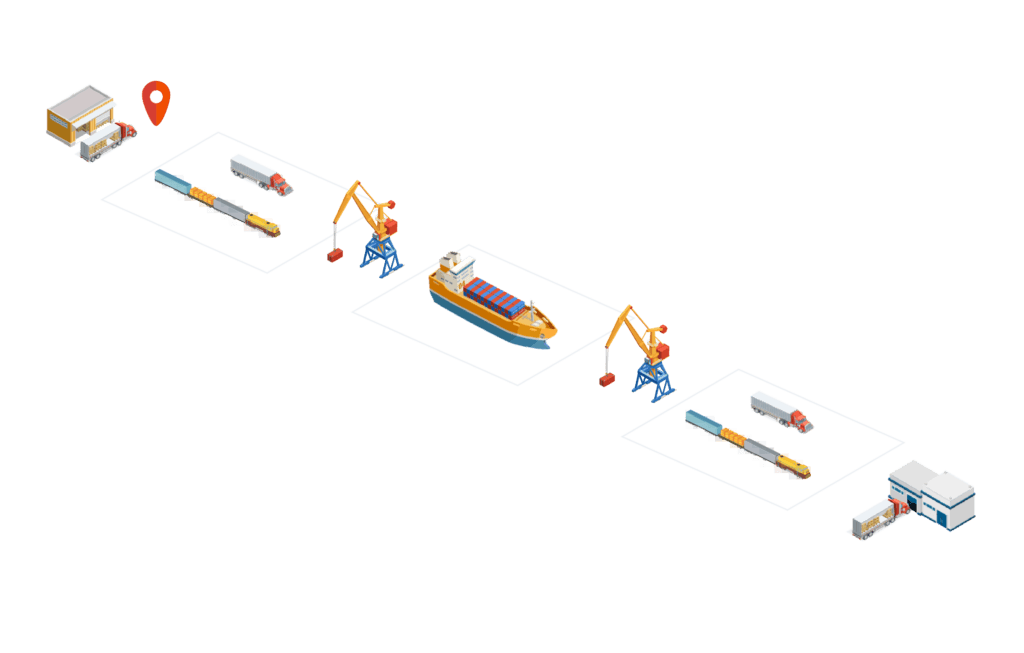
Intermodal transportation is a method of shipping that involves moving cargo in shipping containers using multiple modes of transportation (such as ships, trains, and trucks) without handling the freight itself during transfers between modes. The container acts as a transfer unit, allowing goods to be transported efficiently from origin to destination.
This approach revolutionized global trade by standardizing cargo handling, reducing loading and unloading times, minimizing damage to goods, and overall improving transportation efficiency across different modes of transport.
Relative to the other transport modes


Our 45' HCPW (High Cube Pallet Wide) containers are specifically designed for efficient intermodal transportation. These containers provide maximum loading capacity while ensuring compatibility across different transport modes.

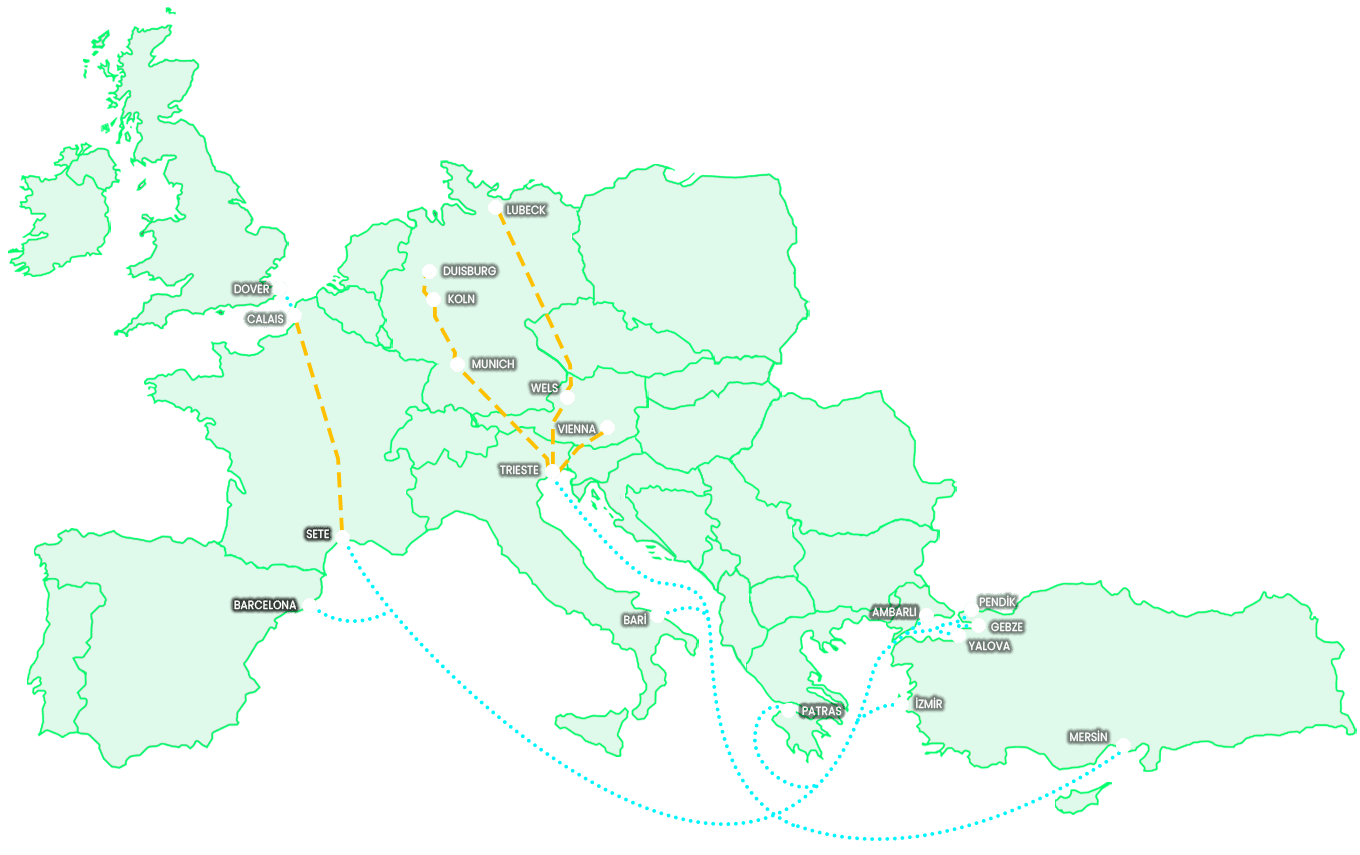
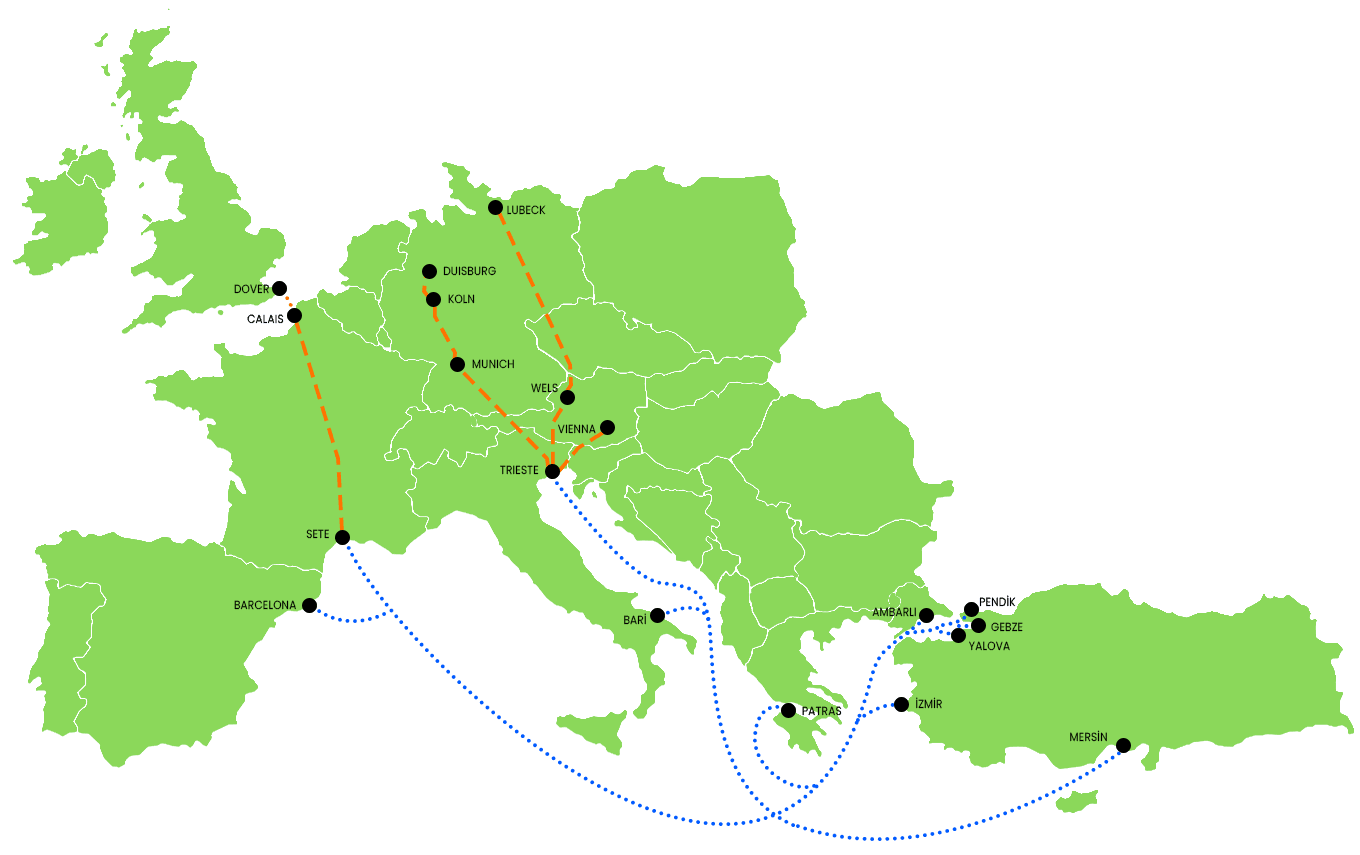
Our intermodal network in Europe provides efficient and reliable transportation solutions for your cargo. With strategically located terminals and seamless connections between different modes of transport, we offer cost-effective and sustainable shipping options across the continent.
In today's global logistics network, intermodal transport is highly organized through sophisticated systems:
Advanced IT systems connect all parts of the supply chain, providing real-time tracking and visibility of shipments across different transport modes.
Purpose-built facilities for efficient container transfers between transport modes with automated handling equipment.
ISO containers allow seamless transfers between ships, trains, and trucks without unpacking goods.
Fourth-party logistics providers orchestrate entire supply chains using intermodal solutions.
Modern intermodal networks increasingly integrate sustainability practices, with companies optimizing routes to reduce emissions and exploring alternative fuels for the first and last mile transportation segments.
Intermodal shipping as we know it today began with Malcolm McLean, a trucking entrepreneur who developed the first modern shipping container system in 1956. McLean's innovation was to create a standard metal container that could be loaded onto ships without unpacking the contents, then transferred directly to trucks or trains.
The International Organization for Standardization (ISO) established global container standards in the late 1960s, allowing interoperability across different transportation systems worldwide. This period saw rapid adoption of containerization in major ports and the development of specialized container ships.
Deregulation in many countries opened up new opportunities for intermodal transport. Double-stack rail technology emerged, dramatically increasing efficiency. Computer systems began to integrate with logistics operations, enabling better tracking and management.
Modern intermodal transport features sophisticated digital tracking systems, automated terminals, and a growing focus on environmental sustainability. The rise of global e-commerce has further driven demand for efficient intermodal solutions that can handle increased volumes while maintaining reliability.
Standard unit of measure for container capacity, based on a 20-foot long container.
Refers to a 40-foot container, equivalent to 2 TEUs.
Short-distance road transport of containers between terminals, ports, and distribution centers.
Facility designed for transferring containers between different modes of transport.
Rail transport method where containers are stacked two-high, maximizing capacity.
Practice of unloading materials from incoming transport and loading directly onto outbound transport with minimal storage time.
Large overhead crane used for loading and unloading containers at terminals.
Vehicle used for handling containers in smaller terminals, capable of stacking and retrieving containers.
Our comprehensive logistics lexicon contains hundreds of industry terms, abbreviations, and definitions to help you navigate the complex world of transportation and supply chain.
We follow the same transparent steps on every shipment, so you always know what happens and when.
We review your cargo type, volume, route and delivery deadline together.
We choose the most suitable mode and route, then share a clear price and plan.
Our team coordinates loading, transport and the required documents.
The cargo is delivered to its destination and the delivery documents are sent to you.
Intermodal transport moves a load from origin to destination using two or more transport modes (road, rail, sea) in a single standardized unit, usually a container. The goods themselves are not handled when the unit changes mode, which lowers damage and handling time.
Intermodal describes the technical way cargo moves: the same loading unit travels across modes without its contents being handled. Multimodal describes the contract: a single operator is responsible for the whole journey under one transport document. A shipment can be both.
A 45' HCPW (High Cube Pallet Wide) is a 45-foot, extra-height container whose internal width lets standard European pallets sit side by side. It is designed to carry more pallets per unit than a standard 40' container on road and rail in Europe.
Starting from Turkey, our Ro-Ro lines run from Istanbul, Izmir and Mersin to Trieste (IT), Sète (FR) and Barcelona (ES). From there, rail connections serve Duisburg, Wels, Cologne, Munich, Vienna, Budapest, Lübeck and Warsaw.
Generally yes. Rail and sea use less energy per tonne-kilometre than trucks, so moving the long-distance leg off the road lowers emissions and relieves road congestion. The exact saving depends on route and load; you can estimate it with our carbon footprint calculator.
Cost depends on distance, cargo type and weight, container type, route and service level. Intermodal is typically most cost-effective on medium and long distances and for full container loads. Send us your origin and destination for a tailored quote.
Learn more about the latest trends, insights, and innovations in the world of logistics and supply chain.
The growing importance of sustainability practices in the logistics industry and innovative solutions to reduce environmental impact.
Read MoreThe role of storage solutions in intermodal transportation, inventory management, and supply chain optimization.
Read MoreThe advantages and disadvantages of different transport modes for informed decision-making in intermodal transportation.
Read MoreLet's find the best fit for your cargo. Modes can be used on their own or combined.
Expert coordination of multiple transport modes under a single contract for optimal efficiency.
Reliable road freight solutions across Europe with modern fleet and experienced drivers.
Sustainable and efficient rail freight services for long-distance cargo transportation.
Global maritime solutions for efficient and cost-effective cargo movement.
Premium air freight services for time-critical and high-value shipments.
Get a customized intermodal transportation quote tailored to your specific shipping needs. Our experts will help you find the most efficient and cost-effective solution.