
Expert coordination of multiple transport modes under a single contract for optimal efficiency.
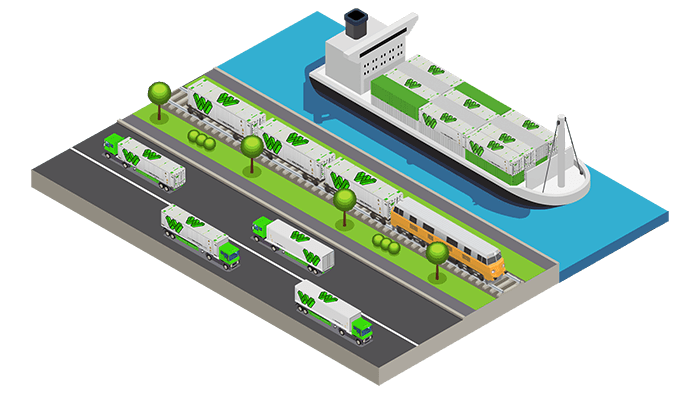
Multimodal transportation is a shipping method where goods are moved using multiple modes of transport under a single contract and coordinated by a single transport operator who takes full responsibility for the entire journey.
Unlike intermodal transport, multimodal shipping emphasizes the legal framework and coordinated management of the entire logistics chain rather than the technical aspect of container handling between different modes.
Relative to the other transport modes
Waldmodal offers integrated multimodal transport services that combine road, rail, sea, and air under unified management to provide optimized logistics solutions tailored to your specific requirements.
Today's multimodal transport services leverage advanced technologies and integrated management systems to provide efficient end-to-end logistics solutions:
Secure, transparent documentation and tracking across all stakeholders in the transportation chain.
Predictive analytics for route optimization, capacity planning, and proactive issue resolution.
Connected platforms that provide real-time information exchange between carriers, ports, customs, and clients.
Transport mode selection based on carbon footprint optimization alongside traditional cost and time factors.
Modern multimodal transport operators function as comprehensive logistics architects, designing complete supply chain solutions that optimize efficiency, reliability, and environmental impact.
Multimodal transport emerged as a concept alongside containerization, with pioneering companies beginning to offer coordinated services using multiple transport modes under consolidated management.
The concept gained international recognition with the adoption of the United Nations Convention on International Multimodal Transport of Goods in 1980, which established the legal framework for multimodal transport operations.
Various regional and national regulations emerged to accommodate and regulate multimodal transport operators, defining liability regimes and documentation requirements.
Modern multimodal transport is characterized by digital integration, with blockchain, AI, and IoT technologies enabling unprecedented coordination, visibility, and efficiency across complex global supply chains.
Entity responsible for the entire multimodal transport chain under a single contract, assuming liability from origin to destination.
Single transport document covering the entire journey across multiple transport modes, serving as a receipt, evidence of contract, and sometimes a document of title.
The transfer of goods from one transport vehicle to another during the journey to the final destination.
Often used interchangeably with multimodal transport in Europe, referring specifically to road-rail combinations.
Transport document covering multimodal shipments from origin to destination, issued by the MTO.
Liability system where compensation for damage or loss is determined based on where in the transport chain the incident occurred.
Final leg of the multimodal transport chain that brings goods to their final destination.
Transport service providers contracted by the MTO to perform specific segments of the multimodal journey.
Our comprehensive logistics lexicon contains hundreds of industry terms, abbreviations, and definitions to help you navigate the complex world of transportation and supply chain.
We follow the same transparent steps on every shipment, so you always know what happens and when.
We review your cargo type, volume, route and delivery deadline together.
We choose the most suitable mode and route, then share a clear price and plan.
Our team coordinates loading, transport and the required documents.
The cargo is delivered to its destination and the delivery documents are sent to you.
Intermodal transport focuses on the technical side of moving cargo (usually a container) between modes without handling the goods themselves. Multimodal transport emphasizes the legal and organizational framework: a single contract and one operator responsible for the whole chain.
It means one point of contact, one transport document and clearly defined liability. If there is a delay or damage, you don't have to deal with several carriers separately.
The multimodal transport operator (MTO) is responsible for the entire journey. The scope and calculation of compensation depend on the contract and the applicable legal framework.
We combine road, rail, sea and air according to your cargo, budget, time expectations and carbon targets.
Learn more about the latest trends, insights, and innovations in the world of logistics and supply chain.
The advantages and disadvantages of different transport modes for informed decision-making in intermodal transportation.
Read MoreHow blockchain is changing document-based processes and the future of customs operations.
Read MoreThe role of storage solutions in intermodal transportation, inventory management, and supply chain optimization.
Read MoreLet's find the best fit for your cargo. Modes can be used on their own or combined.
Optimize your supply chain with our seamless intermodal solutions that combine multiple modes of transport.
Reliable road freight solutions across Europe with modern fleet and experienced drivers.
Sustainable and efficient rail freight services for long-distance cargo transportation.
Global maritime solutions for efficient and cost-effective cargo movement.
Premium air freight services for time-critical and high-value shipments.
Get a customized multimodal transportation quote tailored to your specific shipping needs. Our experts will help you find the most efficient and cost-effective solution.